Site Selector
Current Site: Czech Republic and Slovakia
Site Selector
Current Site: Czech Republic and Slovakia
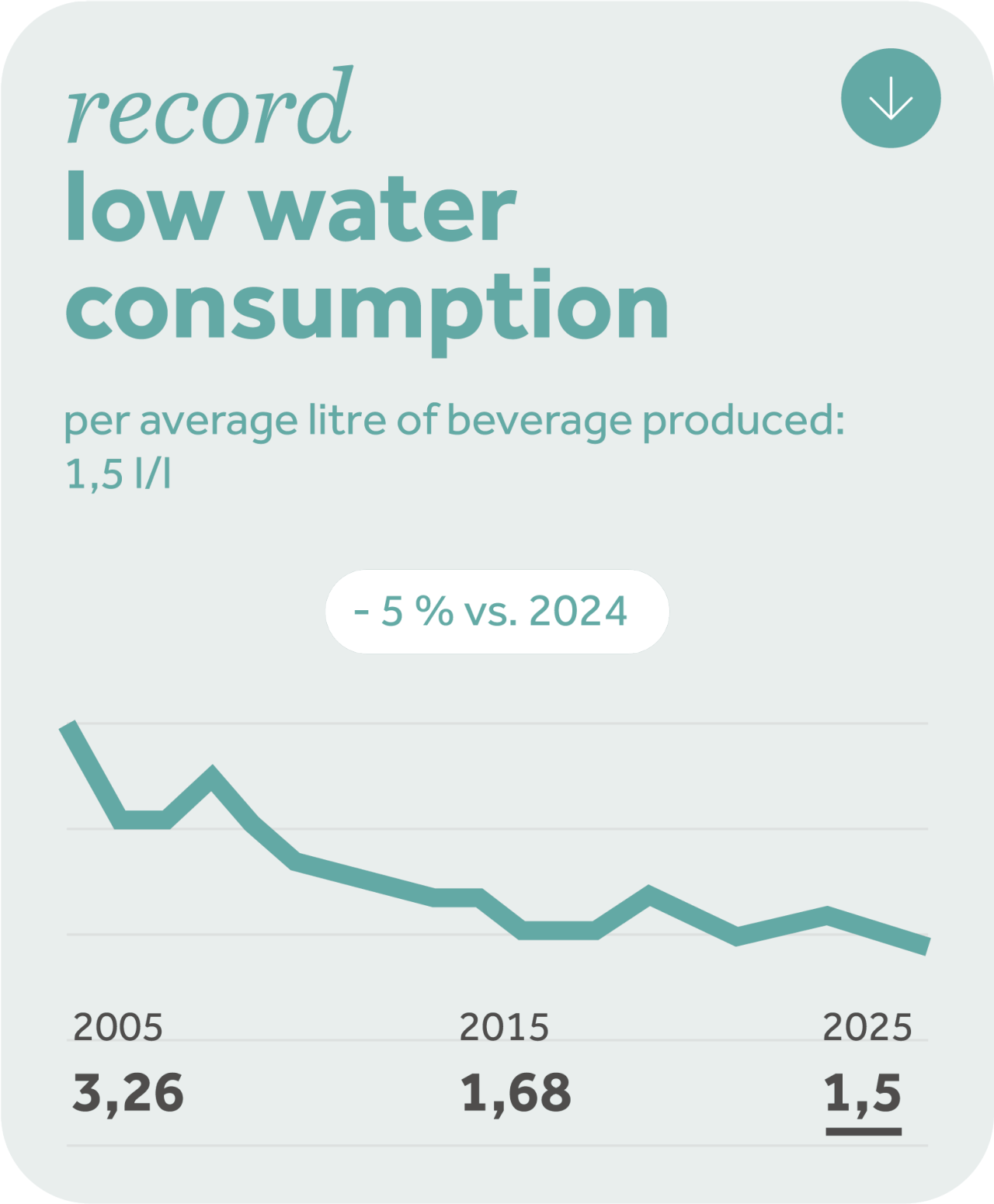
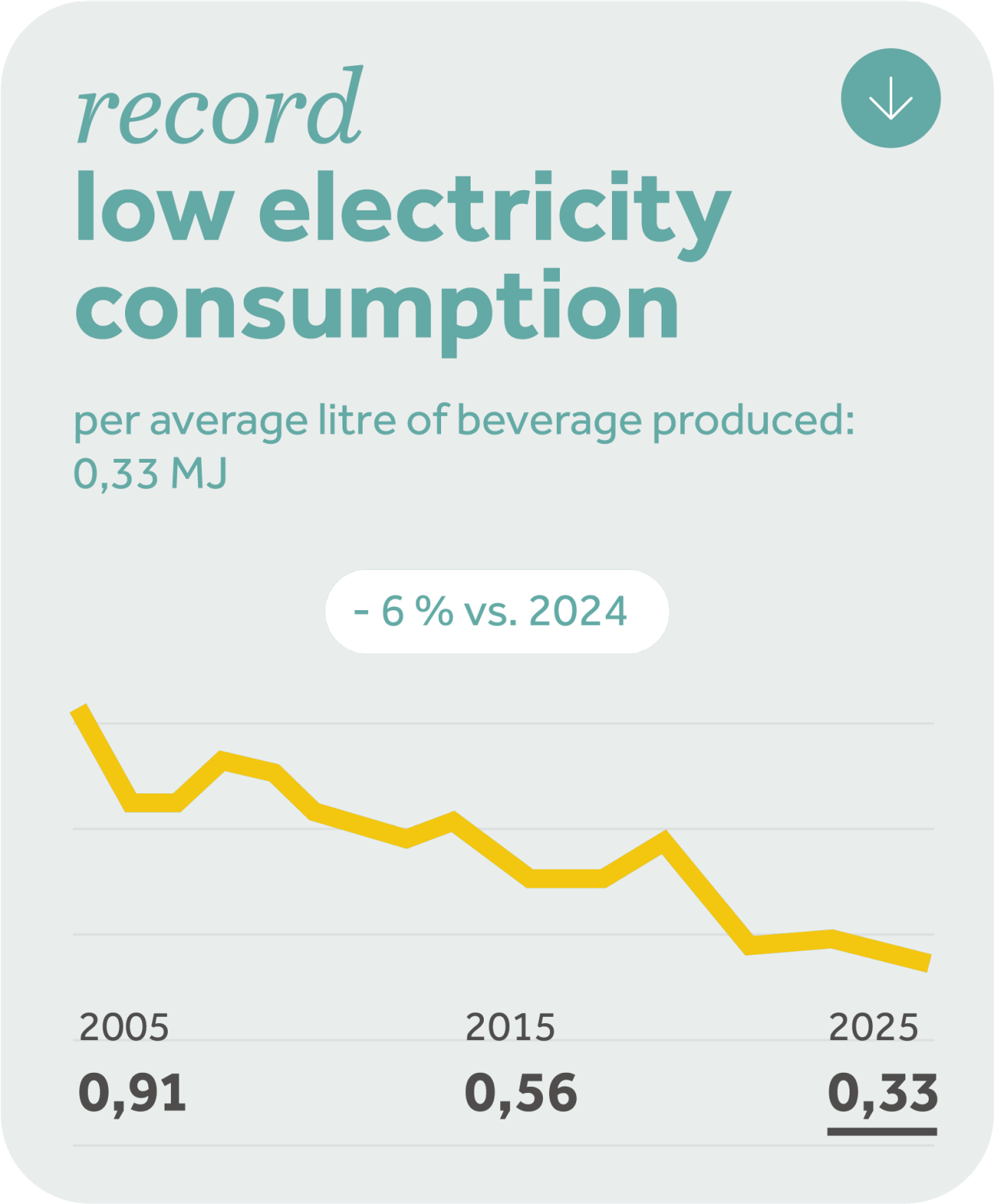
In 2025, we continued the trend set in the previous year and once again achieved our lowest-ever electricity and water consumption per litre of beverage produced. Thanks to our ongoing investment in modern technology, the optimisation of our production processes and the commitment of our teams, we have managed to reduce our electricity consumption to 0.33 MJ/l and our water consumption to 1.5 l/l.
Water makes up around 90 per cent of our beverages, and that is not the only reason why it is a key element of our environmental strategy. The issue of water now consistently ranks highly in surveys of the significance of issues – materiality.
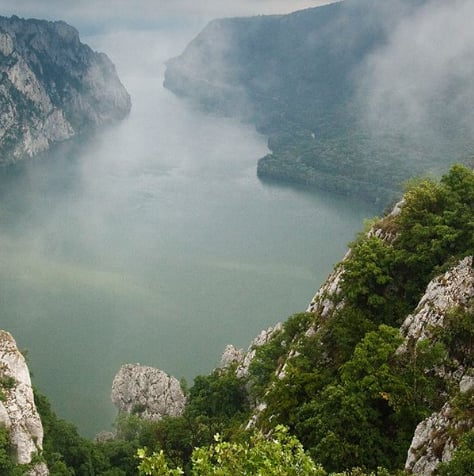
The Malé Foki branch of the Danube, which had been cut off from the main channel for decades and gradually silted up, is now coming back to life thanks to the joint efforts of WWF Slovakia and BROZ – conservation association, and with the support of the Coca-Cola Foundation. The project contributes to the restoration of the unique inland Danube delta and helps to return water to the landscape, improve the condition of groundwater and strengthen the resilience of ecosystems to the impacts of climate change. The initiative forms part of the pan-European Living Danube Partnership, supported by Coca-Cola Europe and Coca-Cola HBC, which, during its first phase, restored nine sites across six countries and returned more than 13 million m³ of water back to nature.
As part of the Slovak RestoRiver project, 343 metres of the Malá Foka branch were restored to free-flowing conditions, 8,327 m³ of sediment and deposits were removed, and a new retention area with a capacity of 8,790 m³ was created. These measures have also improved the condition of nearly 20 hectares of surrounding ecosystems threatened by drying out. The project builds on previous activities carried out by the BROZ organisation, which, as part of the LIFE programme, restored the flow of water through the first two kilometres of the Istragov branch.
The restoration project is being carried out by WWF Slovakia with co-funding from the Living Danube Partnership, Coca-Cola Czech Republic and Coca-Cola HBC Czech Republic and Slovakia.
The restoration of the Malá Foka tributary proves that if we give the river back its natural space, nature will reward us immediately. It is not just a matter of saving a single river branch, but of the country’s overall resilience to climate change. "Every litre of water that we retain in the tributary system thanks to this project helps to stabilise groundwater reserves and protect the biodiversity that is intrinsically linked to the Danube.
Miroslava Plassmann Director of WWF Slovakia
Cooperation with the WWF is also continuing in the Topoľové hony area, where implementation has been postponed and the Foki project has been given priority. The restoration of the stream near Adolfov in the Ore Mountains is being carried out in collaboration with WWF Czech Republic.
We continue to reaffirm our commitment to protecting water resources and shaping the landscape in the Broumov region. The landscape water retention project is being led by the Broumov Region Strategic Council and the Association Živá voda. They draw up feasibility studies for water retention across entire river catchment areas and follow these up with implementation. Together, we are thus making the Broumov region the first to have a comprehensive strategy for working with the landscape in the best possible way, and not just in this respect. In 2025, the studies were further expanded and the project moved into the implementation phase in other locations. Our Company contributed CZK 450,000 to this initiative.
By 2040, we will cover the entire Broumov region with landscape adaptation studies to climate change.
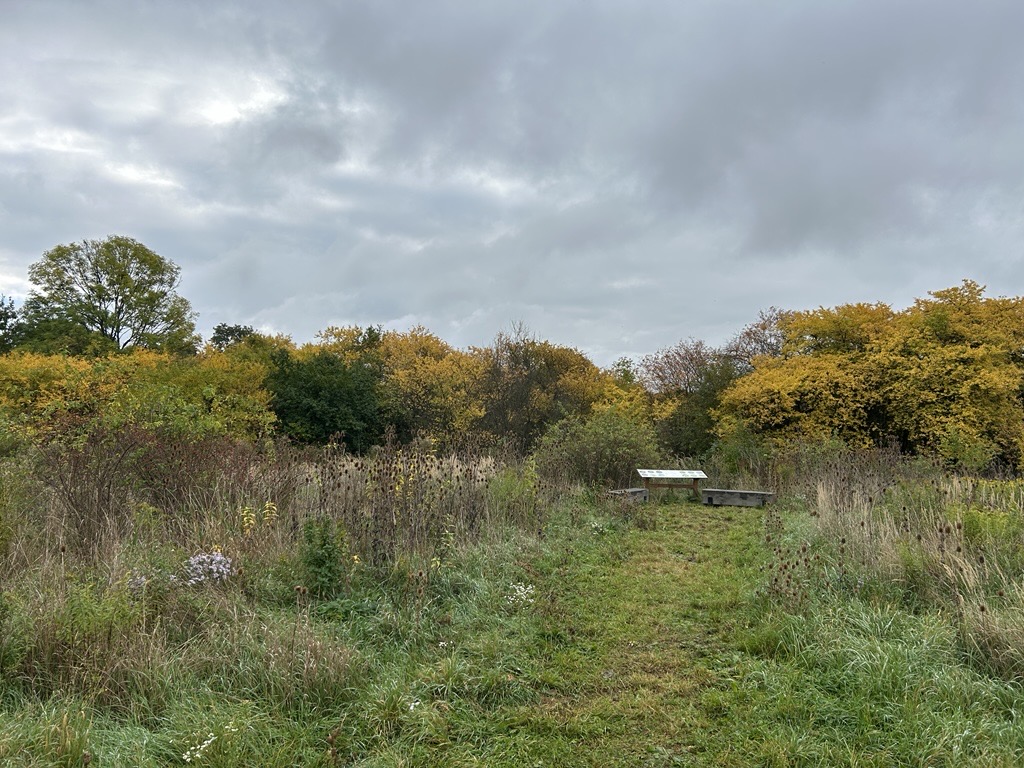
A new ornithological survey initiated by Coca-Cola Czech Republic and carried out in collaboration with the Czech Ornithological Society has confirmed the high ecological value of the wetland on the site of the Coca-Cola HBC Czech Republic and Slovakia plant in Prague. During the survey, dozens of bird species were recorded, including the endangered Eurasian wryneck (Jynx torquilla) . The results built on previous monitoring, which identified more than 80 plant species at the site, seven of which are classified as specially protected. The survey confirmed that the wetland serves as an important habitat, providing shelter, nesting opportunities and a stopover point for a number of animal species in an urbanised environment.
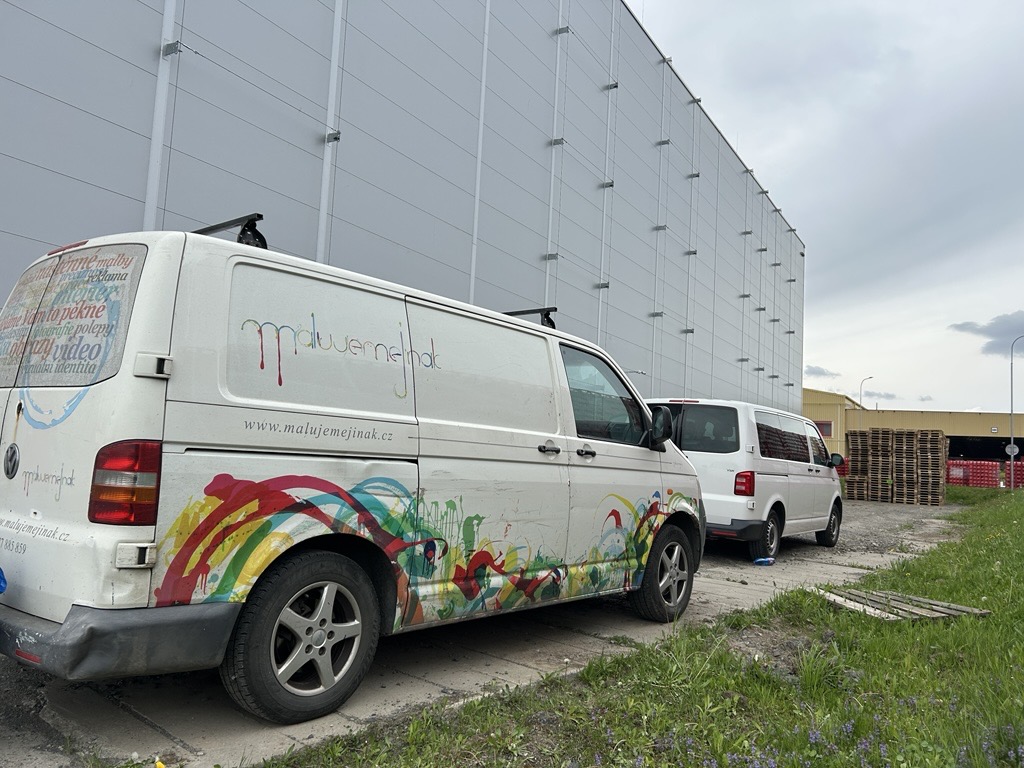
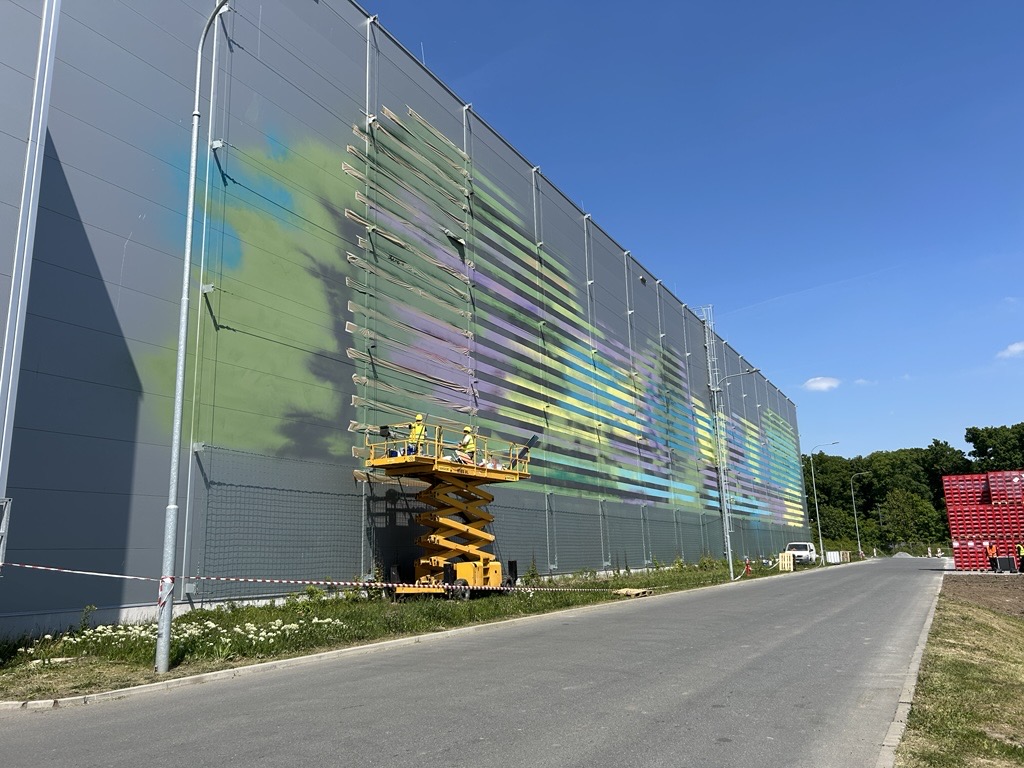
The next step in the development of the site was the completion of a large-scale mural on the wall of the automated warehouse. The artwork, entitled ‘Landscape in Motion’, was created by the Malujeme Jinak studio, and its motif is inspired by the surrounding wetlands and countryside as seen from the perspective of a train passenger. The mural was created using weather-resistant paints and, over the course of 13 days, transformed an industrial building into a visual feature that symbolically links the production site with the surrounding natural environment and raises awareness of the importance of protecting water and biodiversity.
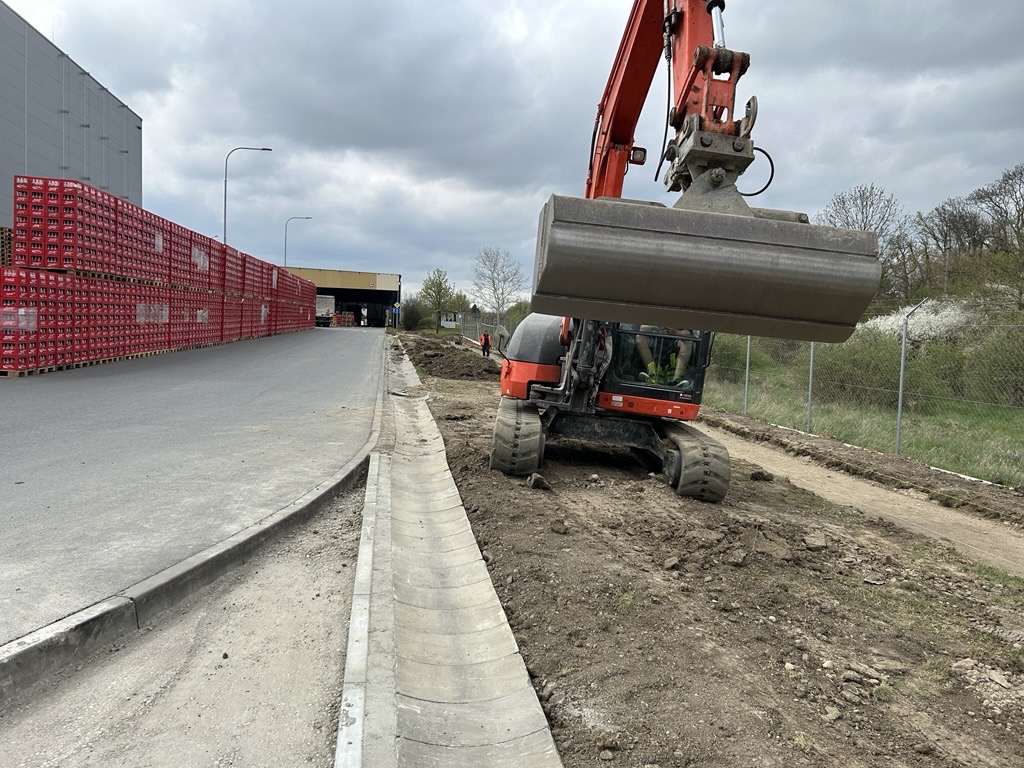
The design for the mural was chosen by residents of Prague 14 themselves in a competition organised by graphic design studios. In addition, the Company has built a new access path so that staff can spend more time in the wetland.
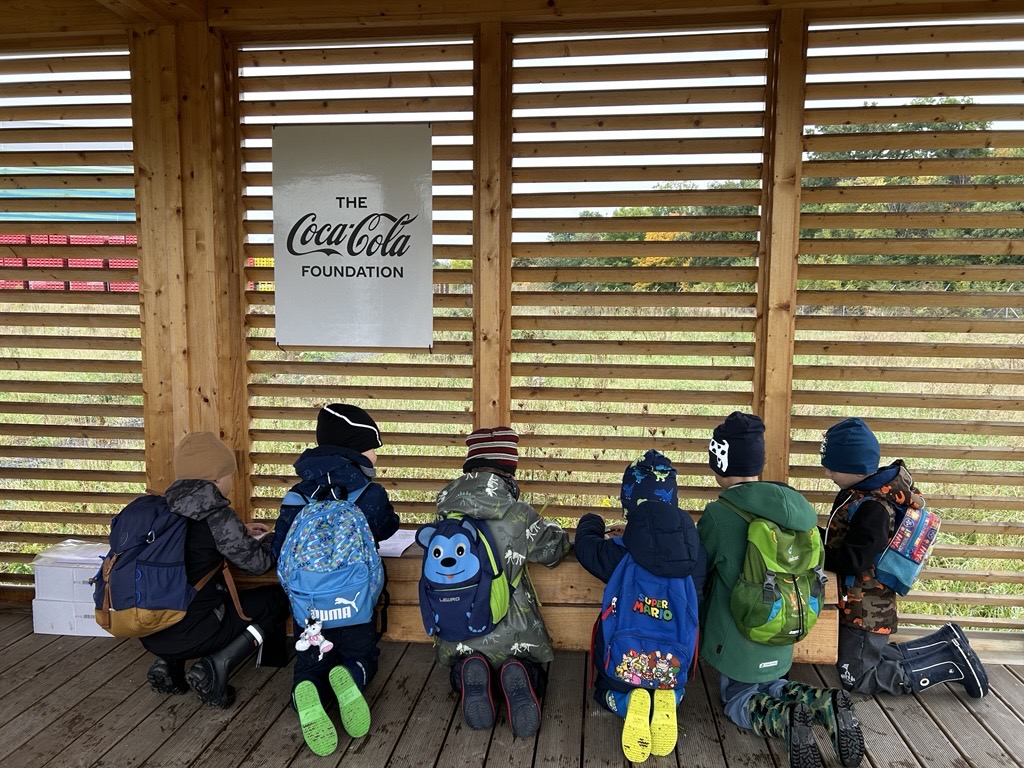
The wetland also hosted a series of educational excursions for all age groups. Retirement associations, which enjoyed the wetland quiz, and kindergartens, for which educational programs and colouring worksheets were prepared in the wetland, also came into their own.
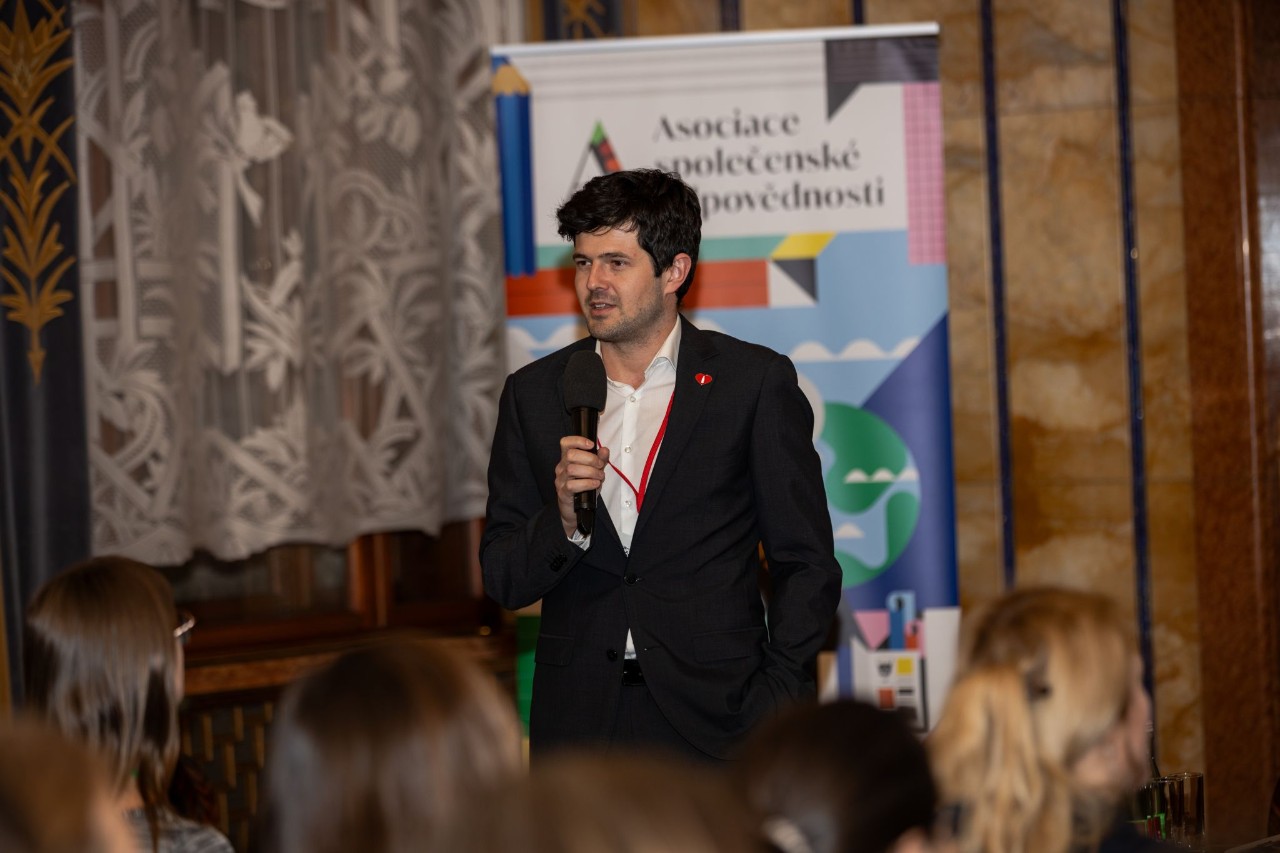
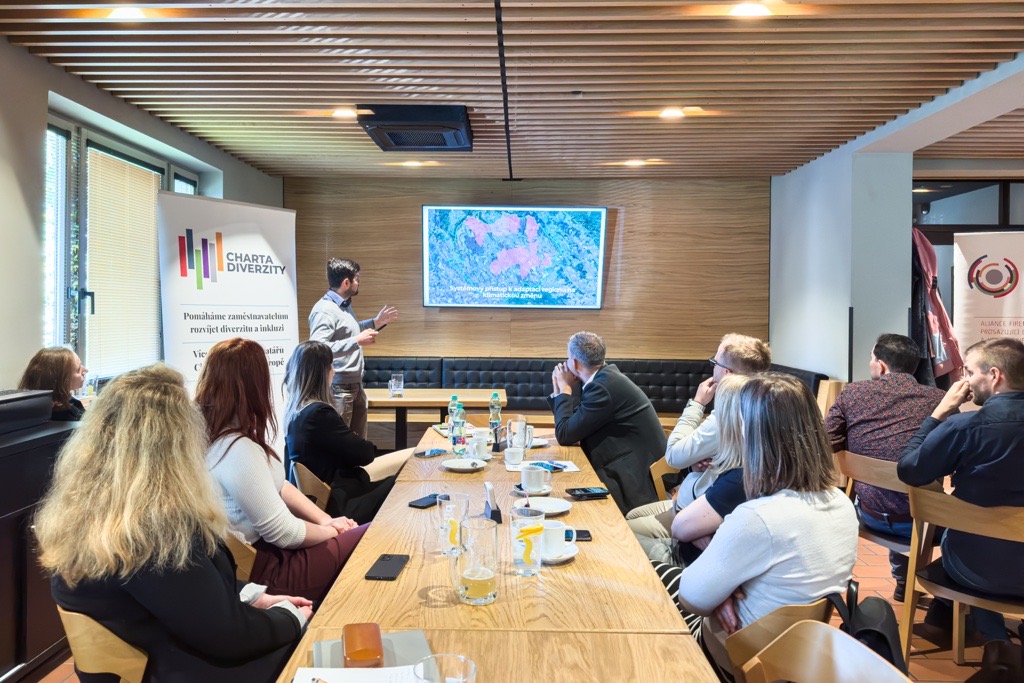
We have spoken about the topic of water protection at several conferences. Together with Jan Školník, we presented the Broumov project at a meeting organised by the Association of Social Responsibility. We also raised this issue at the Business for Society alliance conference in Nošovice. It was an honour for us to be partners for both of these events.
In 2025, we continued our successful efforts to improve the efficiency of water use in production. At the plant in Prague-Kyje, we drew 619,553,141 litres of water from the public water supply (VAK). In Teplice nad Metují, this amounted to 1,384,000 litres from VAK and 53,054,040 litres from a natural water source designated for the production of Natura water.
Among the most significant achievements of 2025 were further improvements in the efficiency of water management. On average, we used just 1.5 litres of water to produce one litre of drink, which is the best result in the Company’s history and also beats the previous year’s record. At the Kyje plant, fuel consumption stood at 1.49 l/l, whilst at the Teplice nad Metují plant it was 1.61 l/l.
Martin Staněk Quality, Safety and Environment Manager
The discharged water was monitored in accordance with legislative requirements and IPPC regulations. Savings were also achieved through the reuse of 8,569 m³ of water in production processes. In 2025, we successfully renewed our ISO 46001 international certification, which confirms our long-term, sustainable approach to water resource management.
Using our specialised software, we continued to monitor key environmental data, which helps us to effectively manage the impact of our operations on biodiversity and ecosystems. A group impact of our activities on natural capital is also available for consultation.
The Prague 14 municipal district used the grant of CZK 250,000 for the Sustainable Development grant scheme. It supported two areas: sustainable development and global responsibility; and the enhancement of public spaces. In total, our Company covered the majority of the grant scheme’s costs in this way in 2025 and helped to meet the needs of all applicants from among the public who met the scheme’s criteria. A key element of the second part of the grant scheme is the work carried out on the front gardens of apartment blocks, which applicants are landscaping in accordance with the principles of sustainable development.
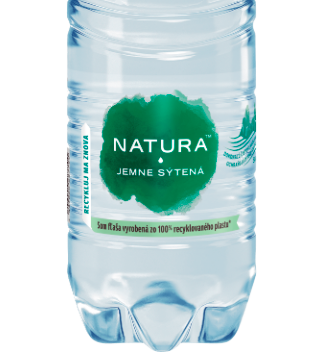
We manufacture Natura spring water bottles from 100% recycled PET material sourced through the Slovak deposit-return scheme (bottles, not labels or caps). In 2025, we successfully continued with this model. The material cycle is thus truly closed – used bottles are turned into new ones, which we refill and return to the market. Thanks to this approach, we reduce CO₂e emissions by approximately two-thirds compared with production using virgin PET. We also sell our Römerquelle water in 100% rPET bottles.
By 2025, the Slovak deposit-refund scheme had achieved a collection rate of 95% for PET bottles and cans intended for recycling. This strong result was, to some extent, due to shifts in the Slovak drinks market following the introduction of a tax on sugary drinks. Even without these fluctuations, the system operates at an efficiency of over 90% over the long term. It is operated by the Deposit Scheme Administrator, whilst the EnviPak system handles the remaining packaging.
In 2025, we were actively involved in promoting the deposit-return scheme in the Czech Republic as well – together with other beverage producers through the Deposit-Return Initiative.
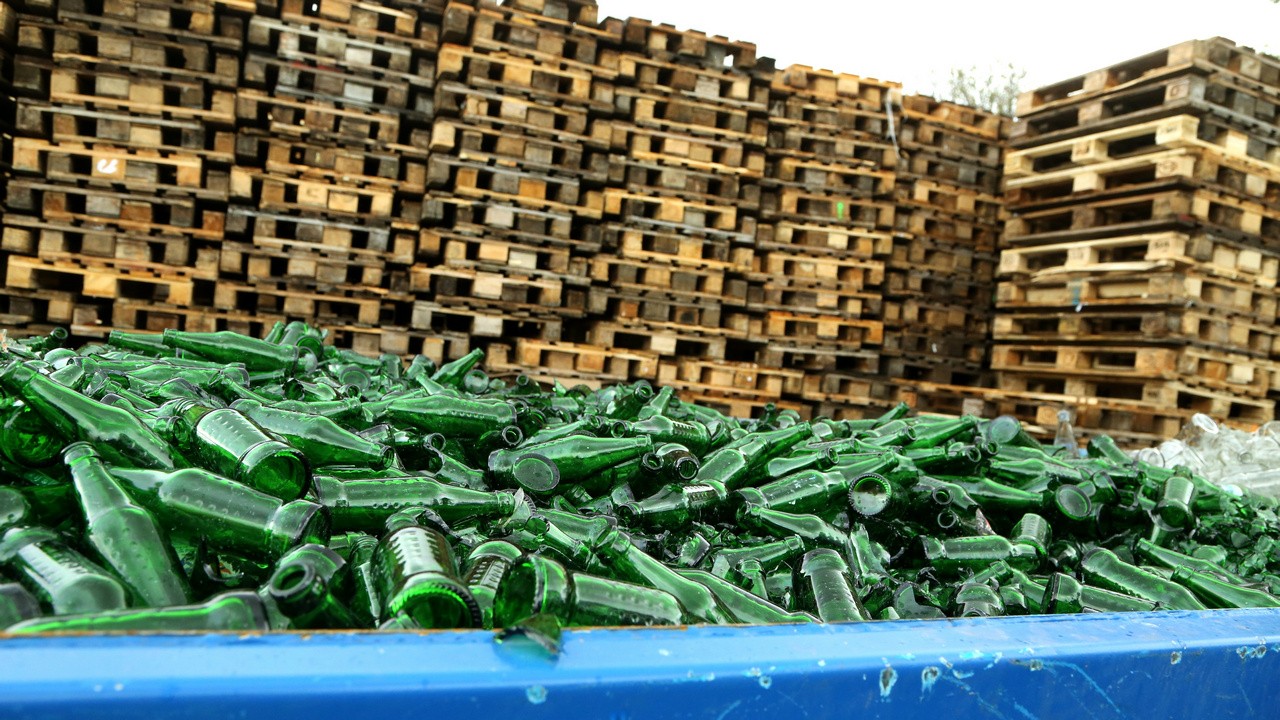
In the Czech Republic, the collection and subsequent management of packaging is handled by the EKO-KOM system, whose recycling rates in 2025 stood at 55 per cent for plastic packaging, 87 per cent for glass, 44 per cent for aluminium and 82 per cent for iron. Glass bottles of most of our non-alcoholic drinks are returned directly from customers to us thanks to a deposit and our own collection. If they are too worn we recycle the material again.
In total, we placed 15,130 tonnes of packaging on the market in 2025, of which 10,892 tonnes were in the Czech Republic and 4,238 tonnes in Slovakia. All our packaging has been designed to be recyclable.
Our smart packaging solutions include the Keelclip paper can holder, non-removable lids for PET bottles, and crates for glass bottles made from 100% recycled plastic. As part of our smart design initiative, we continued to reduce the weight of our PET bottles, shrink film and stretch film in 2025.
As we mentioned earlier, we use 100% recycled material in selected PET packaging – for example, our Natura and Römerquelle brand products (this applies to the bottles, not the labels or caps). Across our entire portfolio, in 2025 we achieved a record-high average proportion of recycled material in PET packaging placed on the market – 39.94% (42.7% for Czech production). Our suppliers also actively use recycled materials – recycled content accounted for an average of 62.65% in glass bottles and 68% in aluminium cans. The use of recycled materials increased year-on-year for all raw materials.
In 2025, the waste management sector achieved results that confirm the path towards an ever-increasing proportion of waste being reused. At our production plant in Prague-Kyje, we produced a total of 2,528 tonnes of waste. Here, all waste was recycled or used to generate energy – not a single tonne was sent to landfill. We’ve managed to do this for the fifth year running. In Teplice nad Metují, we produced 89.7 tonnes of waste. Of this, 86.98% was reused or recycled. The weight of hazardous waste produced amounted to 549 tonnes. In 2025, we generated an average of 5.82 grams of waste per litre of beverage produced.
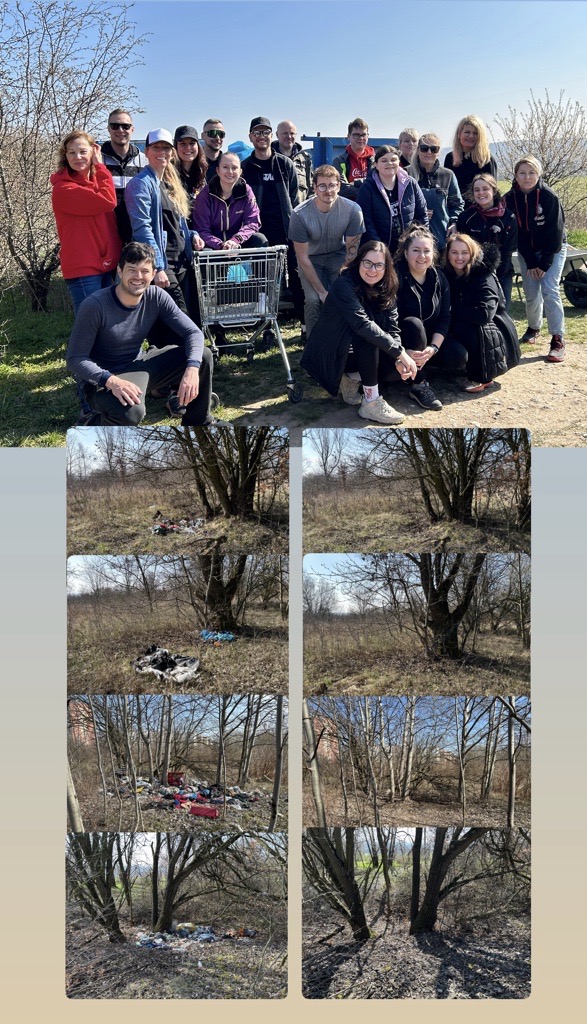
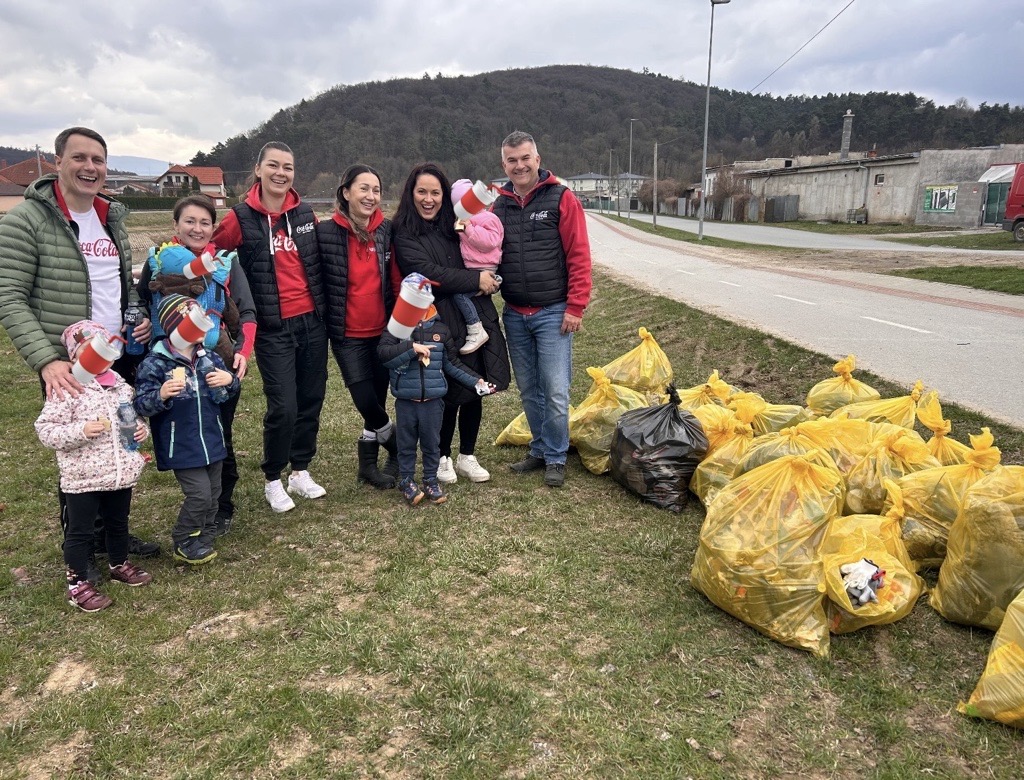
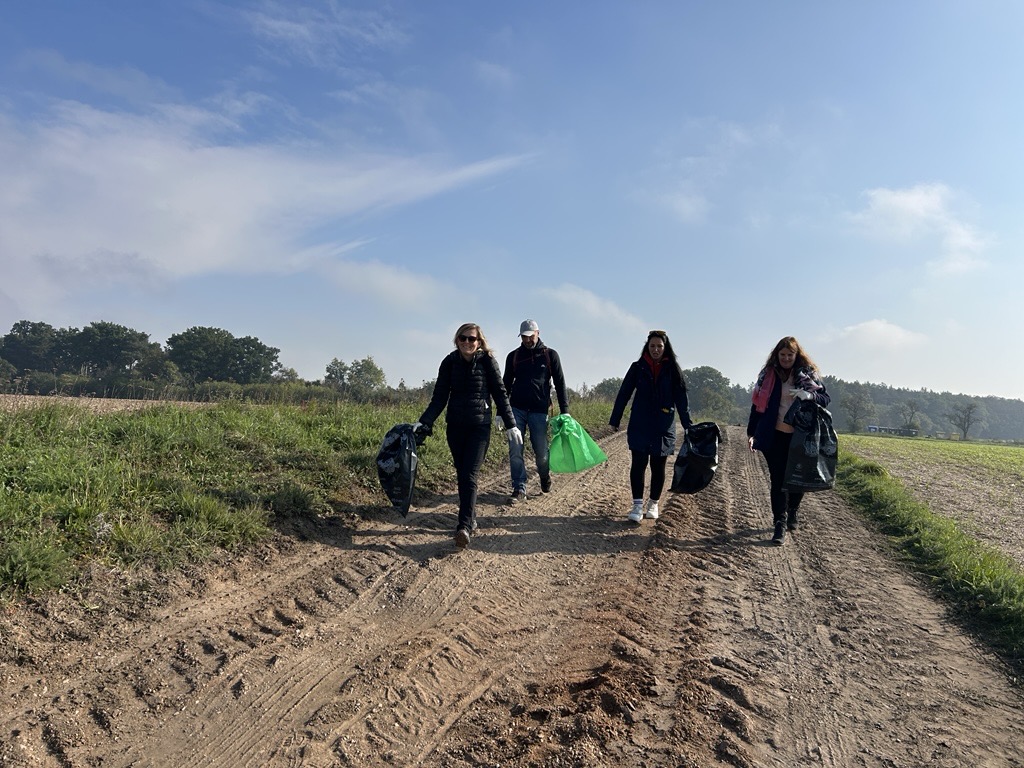
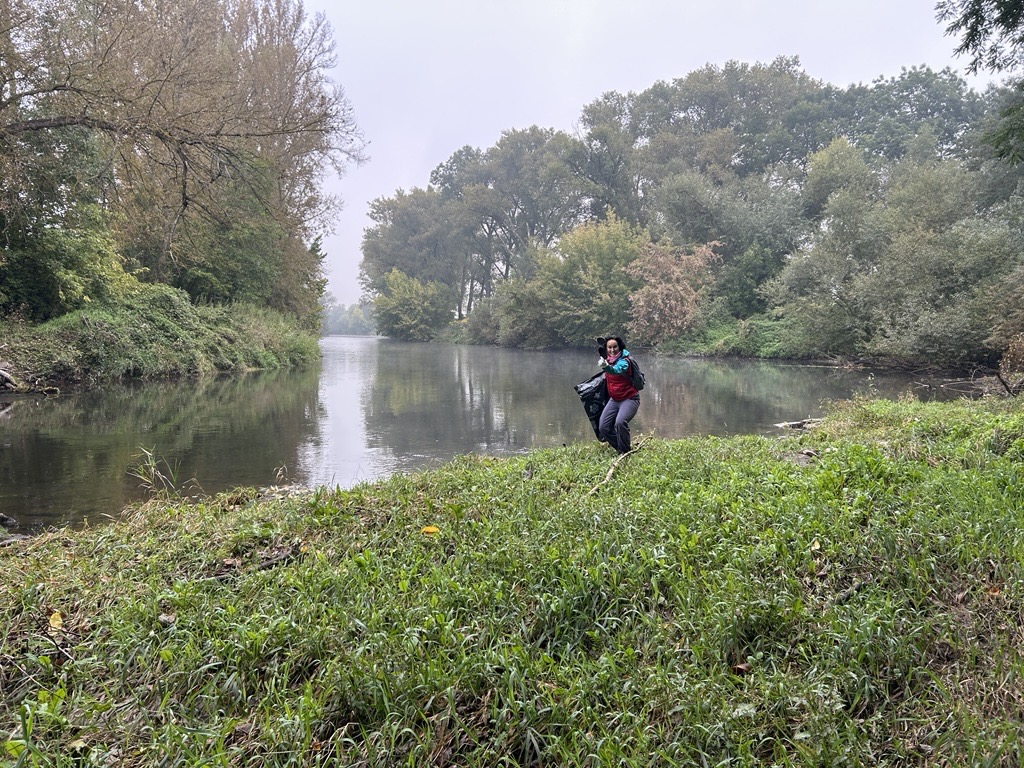
We continued our partnership with the clean-up initiatives ‘Let’s Clean Up the Czech Republic’ and ‘Let’s Clean Up Slovakia’. As well as providing financial support, we also helped these organisations through corporate volunteering. In the Czech Republic, we once again focused on cleaning up around watercourses and helped out with the Čistá řeka Jizera [Clean Jizera River] clean-up campaign. In Prague 14, we were clearing up in Čihadla, near Černý Most, whilst our Slovak colleagues, as is now tradition, went plogging – a combination of running and picking up litter – in places such as Velký Šariš.
We received an award from the city council in recognition of our long-term involvement in clean-up initiatives in Prague 14.
We pay particular attention to packaging and waste, not only because they are among the most important issues for our stakeholders, but also because these efforts enable us to significantly reduce our carbon footprint.
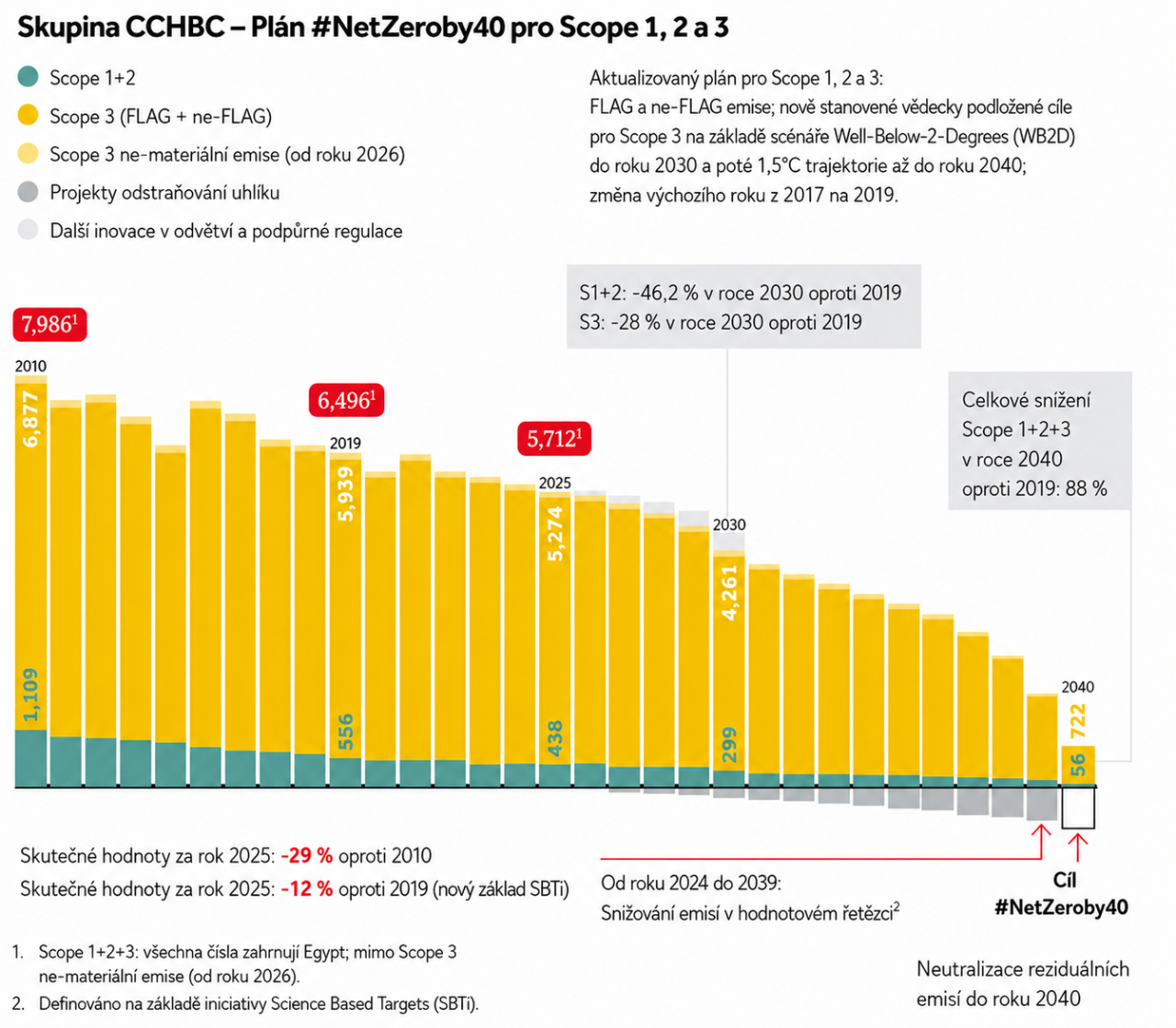
We report our carbon footprint regularly in accordance with the Greenhouse Gas Protocol reporting standards, which categorise it according to emission sources (known as ‘scopes’). Locally, we are helping to meet the climate targets of the entire Coca-Cola HBC group through specific projects aimed at achieving net-zero carbon emissions by 2040 at the latest. In 2025, we revised the calculation of our carbon footprint in line with current metrics and, as a result of this update, changed the base year for our measurements to 2019. These updates mainly concerned Scope 3. The updated results for the entire group are available in the infographic below. We have summarised the specific steps our business unit is taking to contribute to the Group’s NetZeroBy40 commitment in the infographic below.
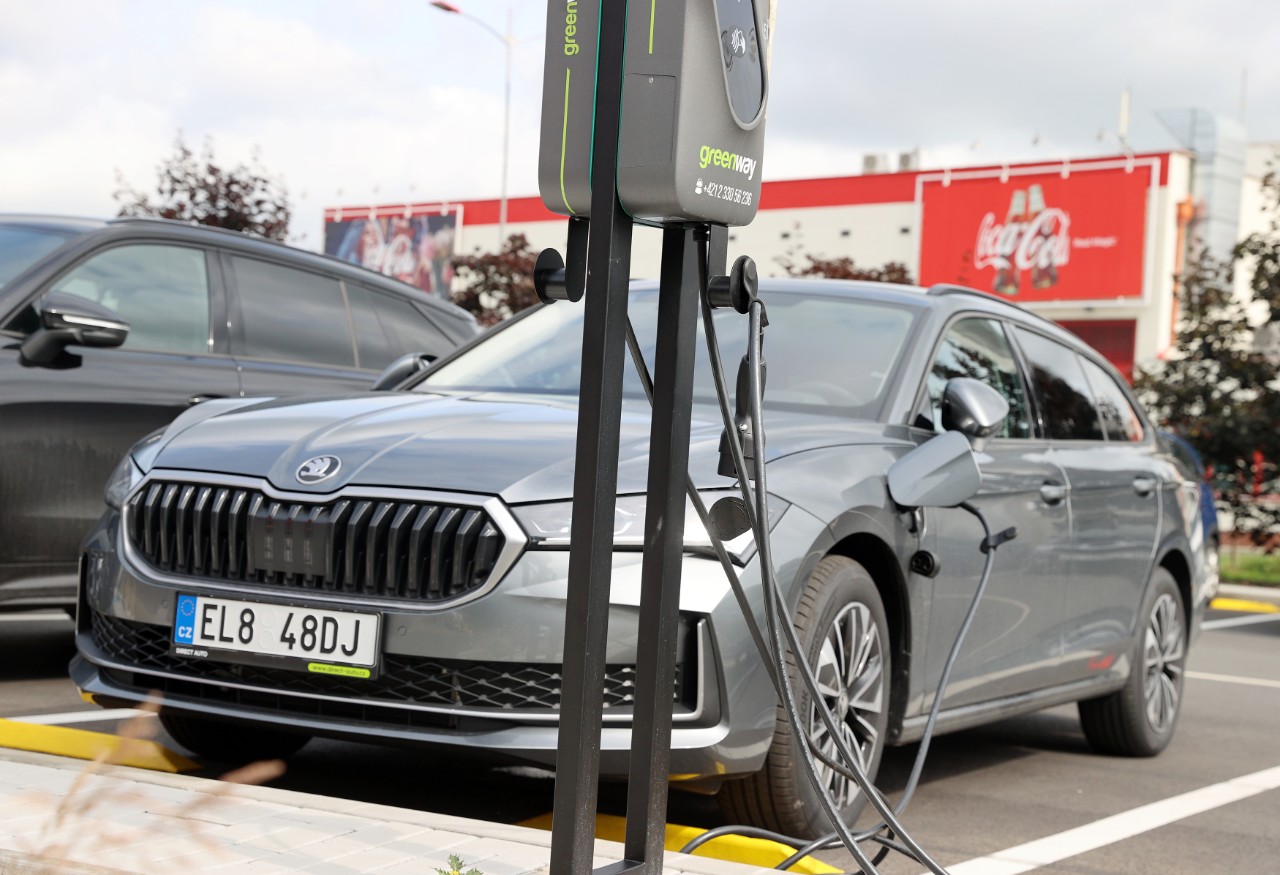
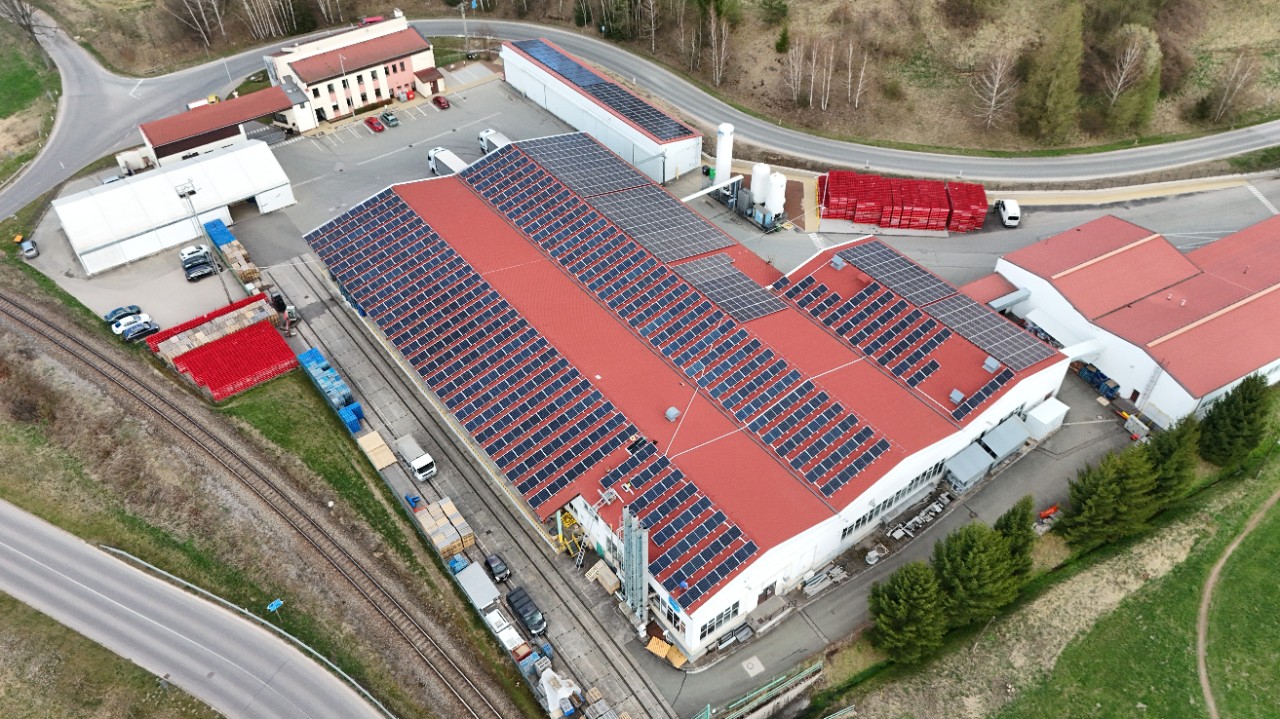
Under Scope 1, we continued to regularly renew our Green Fleet, which by 2025 consisted of vehicles with mildhybrid, plug-in hybrid, fully electric or CNG powertrains. We have also adapted the infrastructure at Flotile and installed a solar roof covering 14 parking spaces, with an installed capacity of almost 50 kWp. The whole project was carried out for three million crowns without state funding. A photovoltaic system with bifacial panels generates approximately 65–70 MWh of electricity per year.
Our 451 passenger cars covered 15,803,126 km. Their fuel consumption totalled 927,849 litres (or kg for CNG) (667,698 l + 260,151 kg). That’s nearly 2% more than in 2024.
In Slovakia, we are a member of SEVA – Slovak Electric Vehicle Association, where we share our experiences with other member companies.
Our own delivery vans have clocked up a total of 535,299 km.
In the Czech Republic, consumption was as follows:
In Slovakia, consumption was as follows:
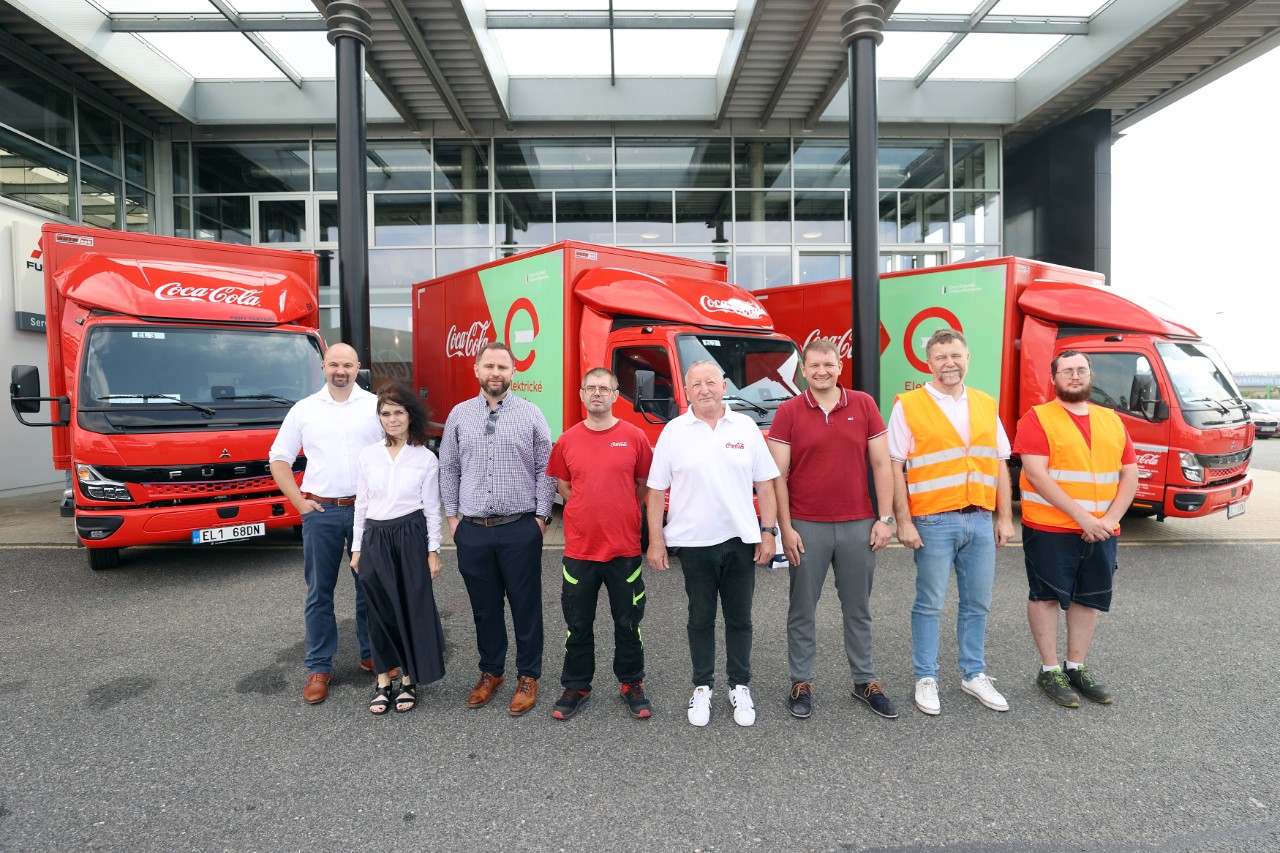
Most of our delivery vehicles were Mitsubishi FUSO mild-hybrid models. In 2025, we expanded our fully electric delivery fleet with additional vehicles Mitsubishi FUSO eCanter. On average, these vehicles deliver 17 parcels a day, requiring an average range of 68. That vehicle will comfortably cover a maximum range of 145 km.
In addition to its own fleet, CO₂ leaks during the bottling of drinks are a significant source of emissions under Scope 1. We addressed this in 2025 by drawing up a project to replace the use of CO₂ in part of the production process with sterile air. The remaining emissions in this category are caused by polishing equipment in the production process and the remaining diesel generators. Here, too, we have been working to use these resources more efficiently in order to minimise our carbon footprint.
Our business unit’s total Scope 1 emissions amounted to 4,142 tonnes of CO₂e in the year under review, representing 2.2% of the total carbon footprint.
In Scope 2, the carbon footprint consists almost entirely of the steam, heat and cooling supplied for production. We obtain steam and heat from the ZEVO waste-to-energy plant in Malešice. Energy recovery is the most appropriate form of waste management after reuse and recycling. We are managing to reduce this part of our carbon footprint primarily thanks to the ongoing Energy TOP 20 project, which is a constantly updated list of the most effective energy-saving measures in production.
We have once again managed to reduce electricity consumption per litre of beverage produced to a record low of 0.33 MJ/l. Since 2008, this figure has fallen to less than half.
In 2025, we consumed a total of 96,825,258 MJ of electricity in our production processes, of which 91,917,097 MJ was consumed in Prague-Kyje and 4,908,161 MJ in Teplice nad Metují. We have therefore reduced our total consumption by 5,233,457 MJ year-on-year. All the electricity consumed for production was certified as originating from renewable sources. What’s more, we generated a record 601,589 MJ of electricity using our own solar panels.
Our business unit’s total Scope 2 emissions amounted to 2,576 tonnes of CO₂e in the year under review, representing 1.4% of the total carbon footprint.
Scope 3 accounts for the largest proportion of our value chain’s carbon footprint – over 90% in the long term. A significant source is the refrigeration equipment that we lend to customers free of charge, the electricity consumption of which is reflected in our emissions. During the year under review, we continued to replace older models with energy-efficient fridges featuring SmartCool technology, which reduces energy consumption by up to 57 %. We already have most of these fridges on the market. In total, we replaced 3,921 refrigeration units during the year and invested EUR 3,300,000 (over 82 million CZK) in their replacement.
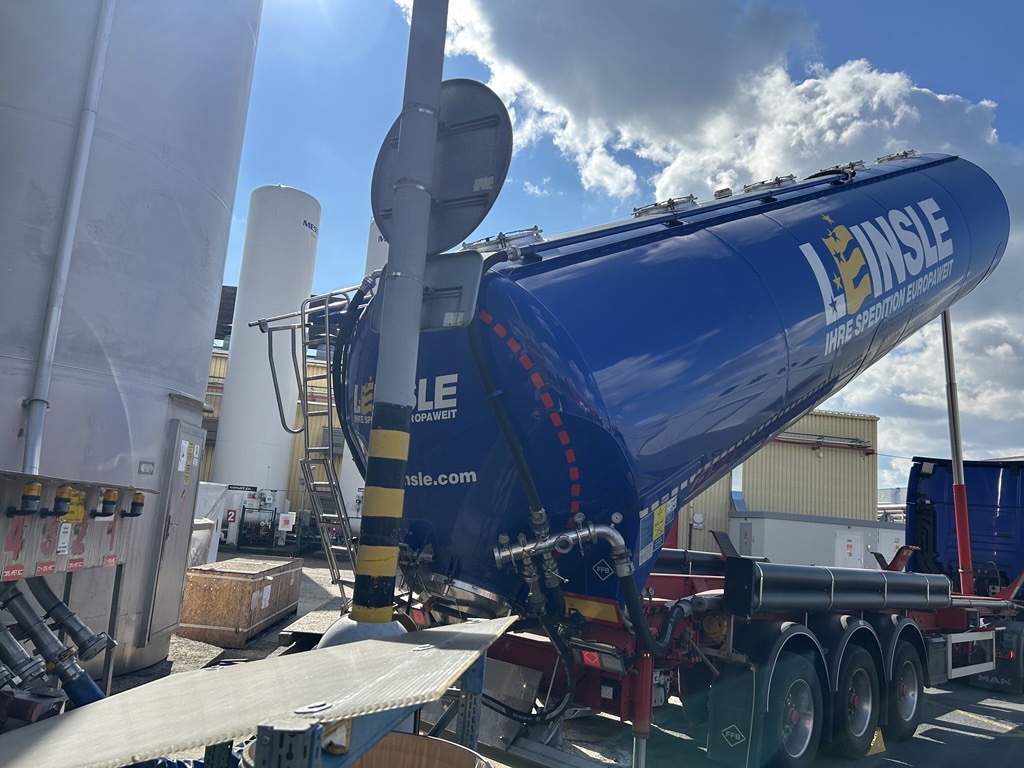
The carbon footprint of the ingredients in our products is influenced not only by our suppliers’ practices, but also by the final mix of drinks sold. In 2025, we continued to work with partners who are helping us on our journey towards net-zero carbon emissions. For our distribution, which is handled by third parties, we have continued to work with hauliers who are constantly optimising their vehicle fleets and providing their drivers with appropriate training. Effective transport planning plays a particularly significant role here. We also continue to benefit from the relocation of our central warehouse to the production plant in Prague-Kyje and from the acquisition of the Natura production plant in Teplice nad Metují, which enables us to draw spring water from a local source. The use of recycled materials, as described above, helps us to reduce the carbon footprint of our packaging.
Our business unit’s total Scope 3 emissions amounted to 180,355 tonnes of CO₂e in the year under review, representing 96.4% of the total carbon footprint.
Overall, in 2025 we succeeded in reducing our carbon footprint at both group and local levels.
At Coca-Cola HBC Czech Republic and Slovakia, we apply clearly defined criteria when evaluating tenders, which also take into account the principles of corporate social responsibility. Our suppliers are required to provide one of the following audit reports: SGP AUDIT, Unilever URSA, SMETA 6.0, AIM-Progress, SMETA 4 Pillars, GSCP Equivalent, BSCI or EICC.
Some suppliers submit their EcoVadis certification to our procurement department.
We are the third company in the Czech Republic to have been certified under Europe’s leading sustainable logistics programme, Lean & Green Europe. This programme represents a voluntary commitment by companies to reduce CO₂ emissions from their logistics operations by at least 20 per cent over five years.
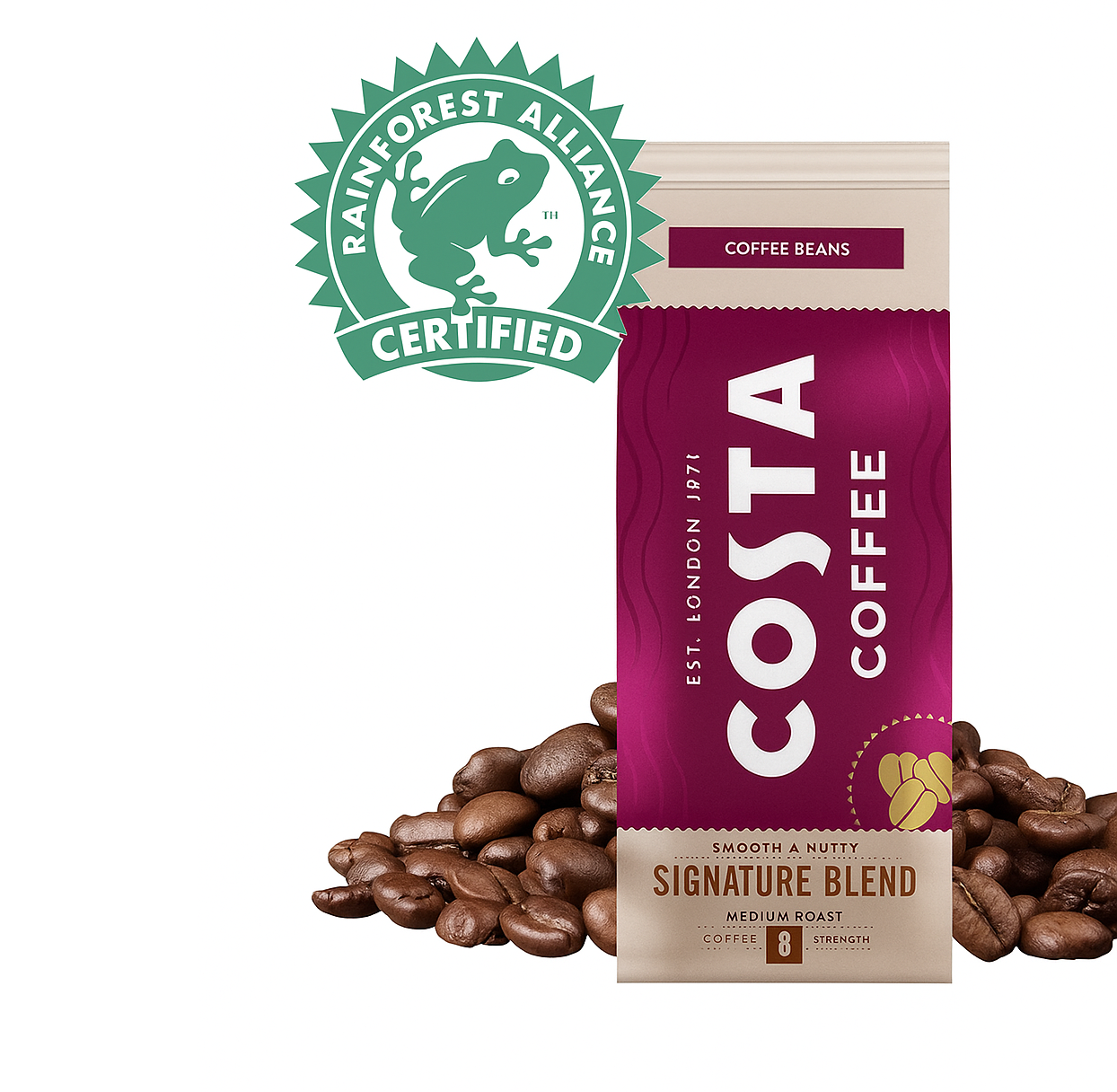
The Rainforest Alliance (RFA) is an international non-profit organisation that promotes responsible business practices and works towards a sustainable future for both people and nature. Only around 6 % of global coffee production comes from farms certified as Rainforest Alliance Certified™. The Costa Coffee brand was awarded this certificate back in 2008 – not only for its coffee, but also for its chocolate. Our FUZETEA iced teas also hold RFA certification.
Across the entire Coca-Cola HBC group, we are committed to not using genetically modified ingredients or additives in all the countries where we operate. Further information is available here: Genetically modified organisms.
In addition to the RFA certification mentioned above, we are regularly audited against the following environmental standards:
ISO 14 000/14 001 – Environmental management
ISO 50001 – Energy management
ISO 46001 – Management systems for the efficient use of water
GAO – System Audit of Sustainability and Quality
FSC/PEFC – Responsible and sustainable forest management
Other brands and ratings:
EKO-KOM Responsible company
SVA-SWPP – Vulnerability assessment and protection of water resources